
An art form over 7,000 years old
Beautiful henna body art — and how to get the best stain
What henna actually is, what goes into my paste, and the simple aftercare that turns a bright orange line into a deep, long-lasting stain.
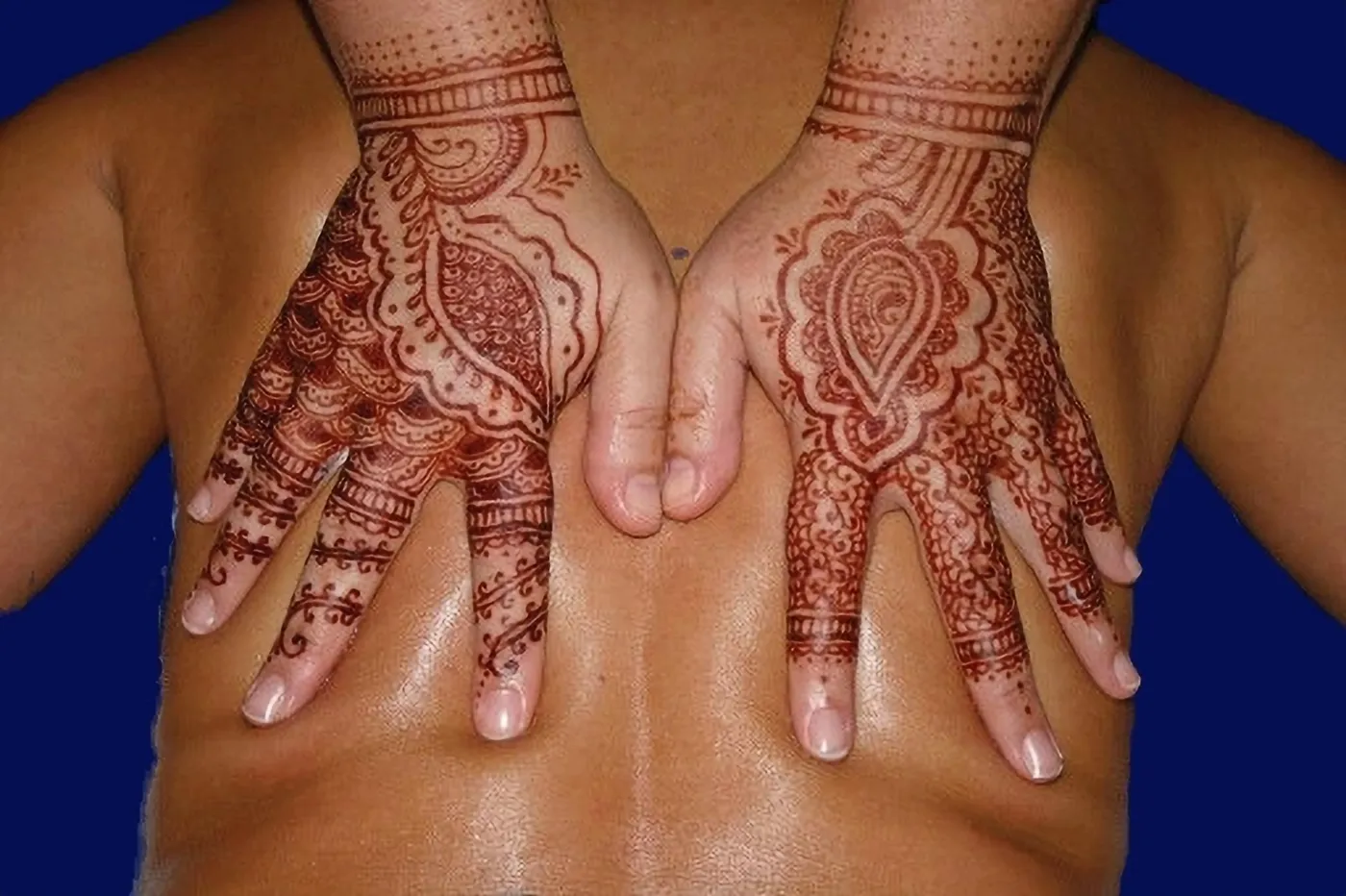
Where henna comes from
Henna, or mehndi, is an ancient art form dating back over 7,000 years. Lawsonia inermis — the henna plant — originally grew in Egypt and can now be found across North Africa, the Middle East and Asia. It does not grow here in the U.S. Being an agricultural product, some crops are better than others depending on climate and region, and our importers take great care in finding the best crops each year.
The plant itself was originally used for its medicinal properties: it is anti-fungal, anti-bacterial and a natural sunscreen. People found that having henna stains on their hands kept their body temperatures lower in desert climates. Over time it evolved into the beautiful designs used to mark important occasions.
How I make my paste
The leaves of the henna plant are dried and crushed to a fine powder, then mixed with lemon juice, sugar and essential oils — I like sweet orange and cajuput. The process takes 24 hours and is done the day before the henna is needed, to ensure the best possible stain.
The paste has “stainability” like grape juice or red wine, so when it goes on the skin it stains that top layer. It isn't painful at all — it's a soothing, calming process. Stains generally last one to two weeks, depending on where the design is and how it is cared for afterwards.
Every henna artist has slight variations on this recipe, but there should never be anything artificial in the paste.
Never get “black henna”
Always ask an artist whether they made their own paste, and exactly what is in it. Never get something called “black henna”: it is not henna at all, but a chemical dye (PPD) that is not skin safe.
I only use all-natural, safe ingredients — crushed henna leaves, lemon juice, sugar and essential oils, and sometimes coffee or apple juice.
How to get the best henna stain
When you get a new henna design, the paste will be wet like toothpaste and will take 15–30 minutes to dry to the touch, depending on the design and the outside temperature. After that, these small things make a big difference.
While the paste is on
- Don't touch it, and be careful of others bumping into it so it doesn't smear.
- Keep the paste on the skin as long as possible — 2–4 hours is good, 6–8 is better.
- Don't wash it or get the paste wet; avoid water for the first 24 hours if you can.
- The paste dries like mud, so resist the urge to flake it off early.
- Keep the area warm — henna loves heat. Get in the sun or sit near a heater.
- When it has had enough time, remove the paste by scraping or rubbing it off, or with olive oil on a cotton ball or paper towel. Best done outside or over a trash can.
Once the paste is off
- The stain will be a light, bright orange for the first 24 hours.
- It takes 2–3 days for the stain to darken.
- To keep your stain longer, do things that delay exfoliation.
- Don't scrub, rub or shave the design.
- Use a natural oil (olive works well) or a balm on the stain before and after bathing.
- Avoid products with chemicals — lotions, cleaning products, swimming pools and so on.
Let's find a time that works
Tell me the date, the place and roughly how many people — or just ask a question. I answer every message myself, usually the same day.